
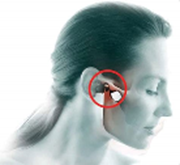
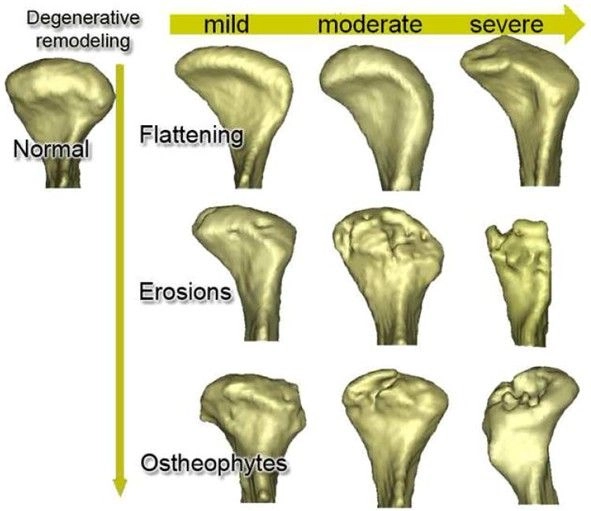
In the world of TMD (TMJ Disorder) it is paramount for the practitioner to keep an eye on the condyles (top of the jawbone where the bone goes into the socket) to make sure they do not break down. With TMD, the articular disc is oftentimes displaced – it should ideally be seated on top of the condyle so that when you open and close you are not grinding bone on bone. The disc basically shields the condyle from being damaged in the socket. In so many cases, however, that little disc is slipped off and the condyle is no longer protected and becomes damaged over time. This is where the term ‘condylar erosion’ is observed.
As a practitioner of the TMJ disorders, it is important to be sure that the disc goes back into proper perspective, i.e., on top of the condyle, or the slipped disc is managed and monitored. There are occasions, at the end of appliance therapy, the discs are still displaced and not exactly where they really should be. But that does not mean you need surgery – no way! By orthodontically erupting the teeth to protect the jaw joints, oftentimes those pesky little discs will no longer be a worry. The eruption of the teeth means that the condyle is no longer ‘jammed’ into the disc up in the socket which can greatly reduce pain and discomfort. In other words, you can ‘manage’ and do just fine for years to come.
The important part of all this is that you have to remember that if the discs are slipped off the condyle, you really should do a new MRI and CBCT X-ray every few years to keep an eye on those condyles and make sure they do not get worse. The patients in our office are well aware that if the displaced discs do one day cause the condyles to worsen/degenerate/break down, then it is time to surgically put the discs back into proper position. This is why we tell people: Once a TMJ patient, always a TMJ patient. It’s no big deal to have a new MRI and CBCT every few years. It’s no more difficult than seeing your PCP or your dentist.
With the big question “why is this condylar erosion thing so important to track?” Well, that’s easy enough to answer. First and foremost is if the disc displacement worsens and the condyle breaks down further, then it is time to do the surgery to put the disc back on top of the condyle where it belongs. Sometimes the discs are already too damaged to put back into place, so the disc needs to be removed. There is no need for a disc to be replaced as long as you wear your protective splint. These types of surgery are simple and take less than an hour to perform by a qualified surgeon. No wiring of the jaw.
Now, here is where we get down to the nitty gritty. If the condyle erodes too much, the next step is TJR (Total Joint Replacement) in which the surgeon has to cut away bone and replace it with titanium joints. This is truly a much more involved surgery than the ones described in the previous paragraph. And now the real kicker with any surgery you need to understand the possible side effects. For this the trouble could be with anesthesia, possible infection, damage to the nerves surrounding the face or ear, and structural failure causing the surgery to be re-done. The procedure itself requires the knuckle of the joint to be cut off with a titanium replacement installed. Sometimes, a little of the bone at the base of the skull is removed, and a high-density type of plastic is replaced. The new titanium knuckle now sits into the plastic acting as the new joint and allowing the full range of movements. Recovery generally is 2 to 6 weeks.
As you can imagine, it’s so much easier and so much less involved if you can just keep up with the program, i.e., monitor your situation with an MRI and CBCT every couple of years and monitoring. So don’t let that condylar erosion get the best of you!