
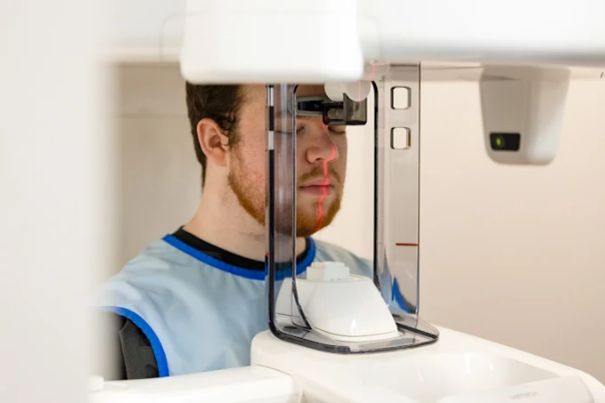
This X-ray serves as a critical diagnostic tool for Temporomandibular Joint Disorder (TMD), commonly called TMJ Disorder. This advanced imaging method offers highly detailed, three-dimensional insights into the cranium, jaw, and cervical spine. Its ability to identify subtle misalignments, detect joint degeneration, and evaluate bone structures ensures a comprehensive understanding of the condition. This precision facilitates tailored treatment plans that address both functional and structural concerns effectively.
The CBCT X-ray is widely utilized for assessing the cranial region, offering unparalleled precision in analyzing the intricate alignment and proportionality of the skull’s bone structure. This noninvasive technology captures high-resolution, 3D images, which allow medical practitioners to observe subtle irregularities that might otherwise go unnoticed with traditional imaging methods. For example, deviations in cranial symmetry can result from congenital conditions, trauma, or lifestyle factors. CBCT aids in diagnosing these issues accurately, facilitating targeted treatments like physical therapy, orthodontic adjustments, or surgical interventions. This comprehensive approach supports enhanced diagnostic accuracy and personalized care.
Cone Beam Computed Tomography (CBCT) is essential for detailed assessments of the jaw’s structural and functional integrity. Beyond its role in analyzing the cranium, it provides high-resolution imaging that captures the precise positioning of the temporomandibular joint (TMJ), which functions as a critical hinge for jaw movement. The TMJ consists of the condyle fitting into the mandibular fossa, separated by the articular disc. Misalignment of the condyles can disrupt smooth movement, potentially causing cartilage displacement. This displacement can compress sensitive nerves and blood vessels, resulting in discomfort, inflammation, or restricted motion. By identifying these irregularities, CBCT aids in diagnosing conditions like TMJ disorders and planning effective treatment strategies.
CBCT imaging not only highlights structural relationships in the cervical spine but also plays a crucial role in diagnosing issues that may arise in this region. It evaluates the alignment and spacing between vertebrae, such as C-1 and C-2, as well as the occiput, ensuring these measurements meet healthy standards, generally around 6 millimeters. When these spaces are narrowed, it can signal compression, potentially leading to symptoms like headaches, neck stiffness, or even conditions such as tinnitus. Additionally, CBCT aids in assessing cervical lordosis, the natural curve of the neck, which, if flattened or exaggerated, could cause chronic discomfort. By identifying these factors, CBCT facilitates targeted treatment, such as the use of TMD appliances, to restore balance and reduce symptoms.
The TMJ view within the CBCT provides critical insights into the health and positioning of the temporomandibular joints. When evaluating the condyles, it is essential to carefully assess their structural integrity, ensuring they are free of abnormalities such as thinning, notching, or irregularities in shape. Additionally, the condyles’ relationship within the joint socket should be evaluated for any signs of displacement, wear, or misalignment. Using the CBCT, practitioners can also verify the efficacy of treatment appliances, such as TMD splints, by confirming that they maintain joint stability and safeguard the surrounding structures.
Overall, the CBCT plays an essential role in diagnosing TMD as it delivers detailed three-dimensional imaging that reveals critical aspects of the craniofacial structure, including the temporomandibular joints, dental occlusion, and soft tissues. This advanced imaging technique helps detect subtle abnormalities, such as joint degeneration or misalignment, that may not be visible in conventional X-rays. Utilizing CBCT in conjunction with clinical evaluations enhances diagnostic accuracy, supporting more tailored and effective treatment strategies for patients.